Home Experiences Group Tours Consulting Blog About Contact Plan Your Journey
EN IT ES
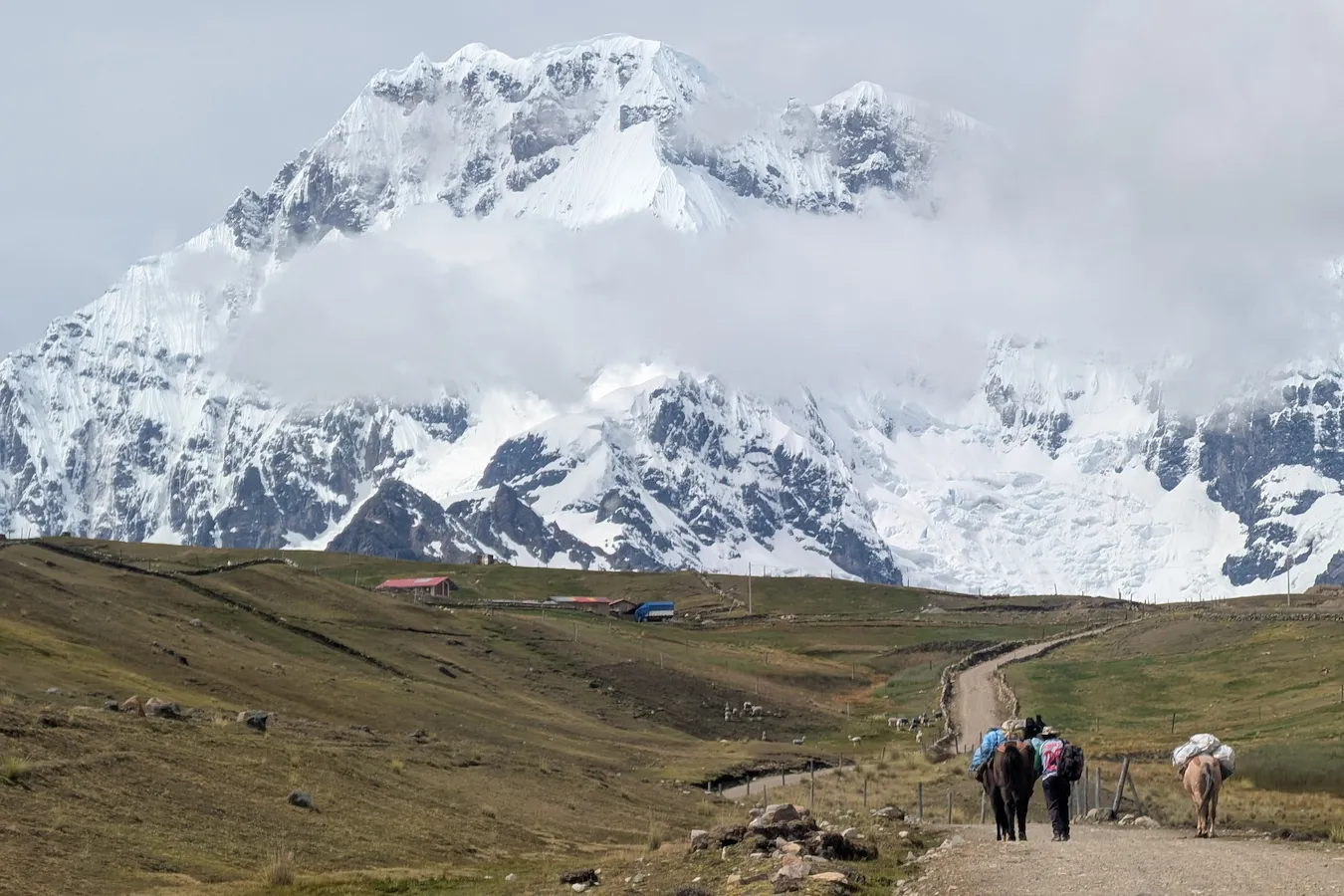
Trekkers and a pack horse walking towards the Upis camp below snow-capped Ausangate, Ausangate trek, PeruAlessio Zucchi
Group Tour · Challenging

Ausangate Trek & Sacred Valley — 10 days in the Peruvian Andes

A small-group journey from Cusco: the Sacred Valley, a 5-day trek around Apu Ausangate, Rainbow Mountain and the Seven Lakes.

Cusco, Peru 10 days / 9 nights Max 10 people

The Ausangate & Sacred Valley trip is a 10-day small-group journey in the Peruvian Andes, starting and ending in Cusco, for a maximum of 10 travellers. It combines two days in the Sacred Valley (Chinchero, Maras, Moray, Ollantaytambo), a free day to acclimatise, a 5-day camping trek around Apu Ausangate (6,384 m) with Rainbow Mountain, the Seven Lakes and the Pacchanta hot springs, and a final day in Cusco.

It is a journey that climbs slowly, the way you do in the mountains. On the trail, passes rise above 5,000 metres, alpacas graze beside turquoise lakes and Quechua herding families live at altitudes where silence weighs differently. You walk with local guides and arrieros who call these mountains home, and return to Cusco with tired legs and a changed way of seeing.

Highlights

01
Ausangate Trek — 5 days
A camping loop around the sacred Apu Ausangate (6,384 m), with passes above 5,000 m.
02
Rainbow Mountain on foot
Vinicunca reached along the trek, outside the day-trip rush hours.
03
Seven Lakes & Pacchanta hot springs
Turquoise glacial lakes and a hot-spring soak facing Ausangate.
04
Sacred Valley of the Incas
Chinchero weavers, Maras salt pans, Moray terraces and Ollantaytambo.

Itinerary

Day 1 Arrival in Cusco
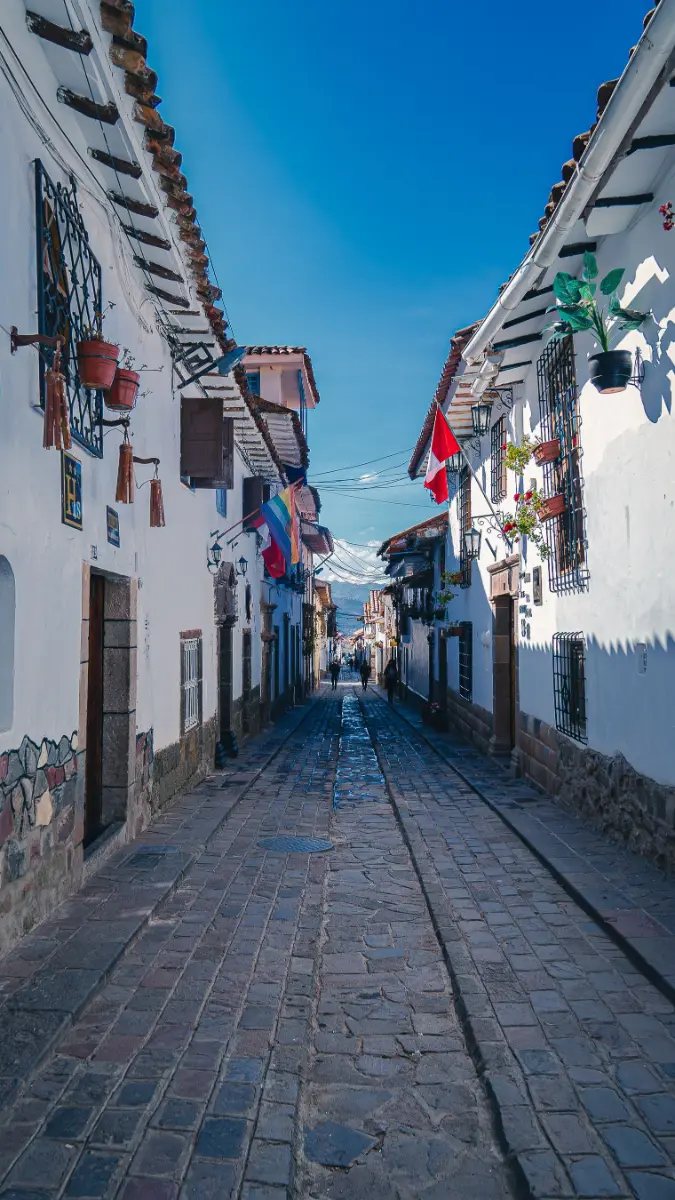
Cobbled colonial street with whitewashed houses and blue balconies under a clear sky in Cusco, Peru Jose Galarza / Pexels
Welcome to Cusco, the ancient Inca capital, at 3,400 metres. After you arrive we take you to the hotel and the rest of the day is for resting: your first day at altitude is about slowing down, sipping a mate de coca and letting your body adjust to the thinner air. If you have the energy, take a short walk through the stone streets of the historic centre, where Inca walls still hold up the colonial houses. In the evening we meet the group and the guide: introductions, a day-by-day walk through the journey and time for questions about the trek, gear and altitude.
Day 2 The Sacred Valley: Chinchero, Maras, Moray and Ollantaytambo
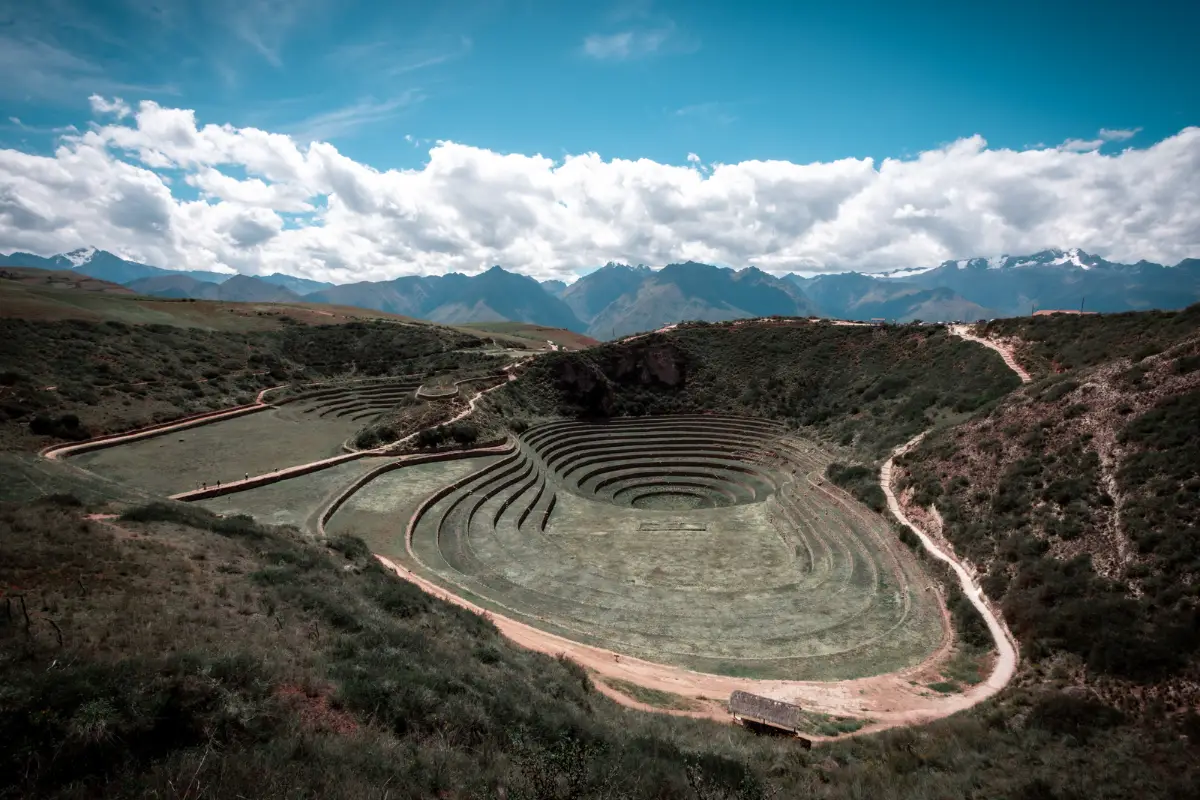
Circular Inca terraces of Moray with snow-capped Andean peaks on the horizon, Sacred Valley, Peru Geovanny Silva / Pexels
We drop down into the Sacred Valley, lower and milder than Cusco: a perfect day for acclimatising. The first stop is Chinchero, an Andean village where weavers work alpaca wool with natural dyes and show how a textile is born, from thread to colour. We continue to the Maras salt pans, thousands of pools carved into the mountainside and still run by local families, and to Moray, the mysterious circular terraces the Incas used as an agricultural laboratory. We end the day in the stone streets of Ollantaytambo, one of the few Inca villages still inhabited, before reaching Urubamba for the night.
Day 3 Free day in the Sacred Valley
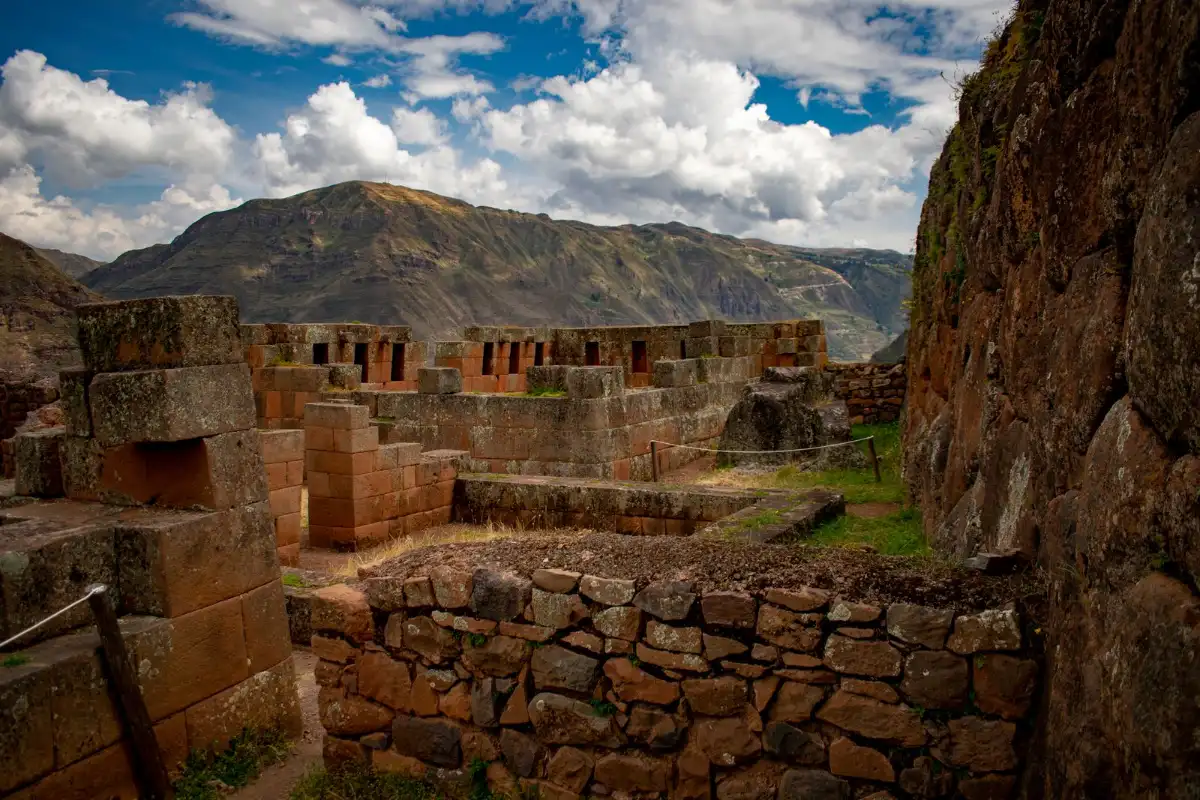
Stone ruins of the Inca citadel of Pisac overlooking the mountains of the Sacred Valley, Peru Marco Luigy / Pexels
A day for you, and one more step in acclimatising before the trek. Walkers can take on the Pumahuanca valley hike above Urubamba: a trail through queñua forests, waterfalls and small farming communities, ideal for testing legs and lungs at altitude. Those who prefer a slower pace can visit Pisac, with its craft market and the archaeological site perched on the mountain, where Inca terraces and temples overlook the whole valley. In the afternoon we return to Cusco to pack and go through a final gear check with the guide.
Day 4 Trek begins: Tinki, Upis and Yanacocha
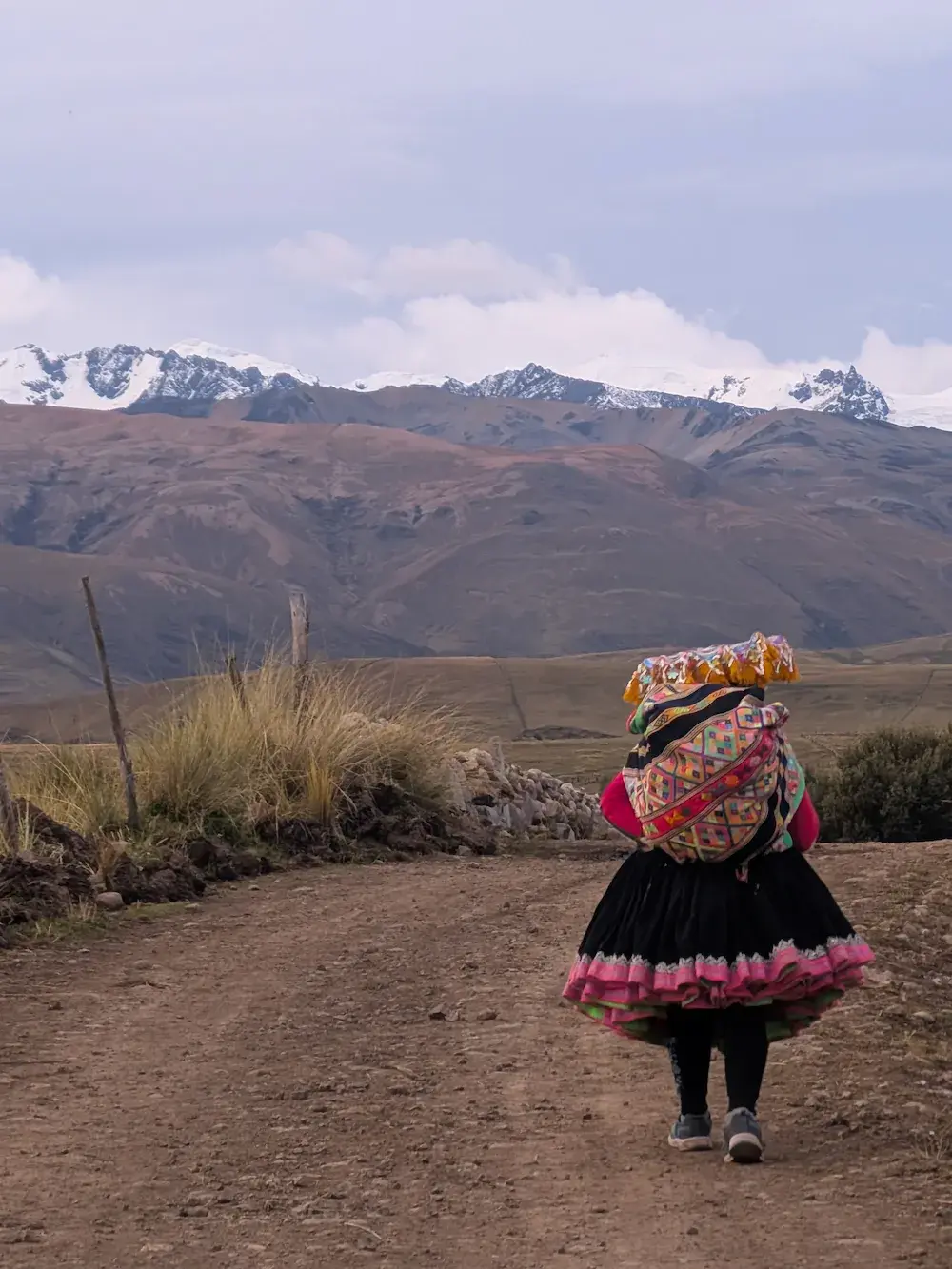
Quechua woman in traditional dress walking along a dirt road near Tinki, with Andean mountains behind, Peru Alessio Zucchi
An early start heading south-east: about three hours by road to Tinki, the village where the trail begins. Here we meet the team of arrieros and their horses, who will carry the camp gear and stay with us for the whole trek. We set off through pastures and stone houses towards Upis, where the profile of Ausangate, 6,384 metres, appears for the first time in all its scale. The pace is gentle, giving the body time to adjust to the altitude. In the afternoon we reach Yanacocha lake and set up our first camp beneath the glaciers.
Day 5 Towards Anantapata
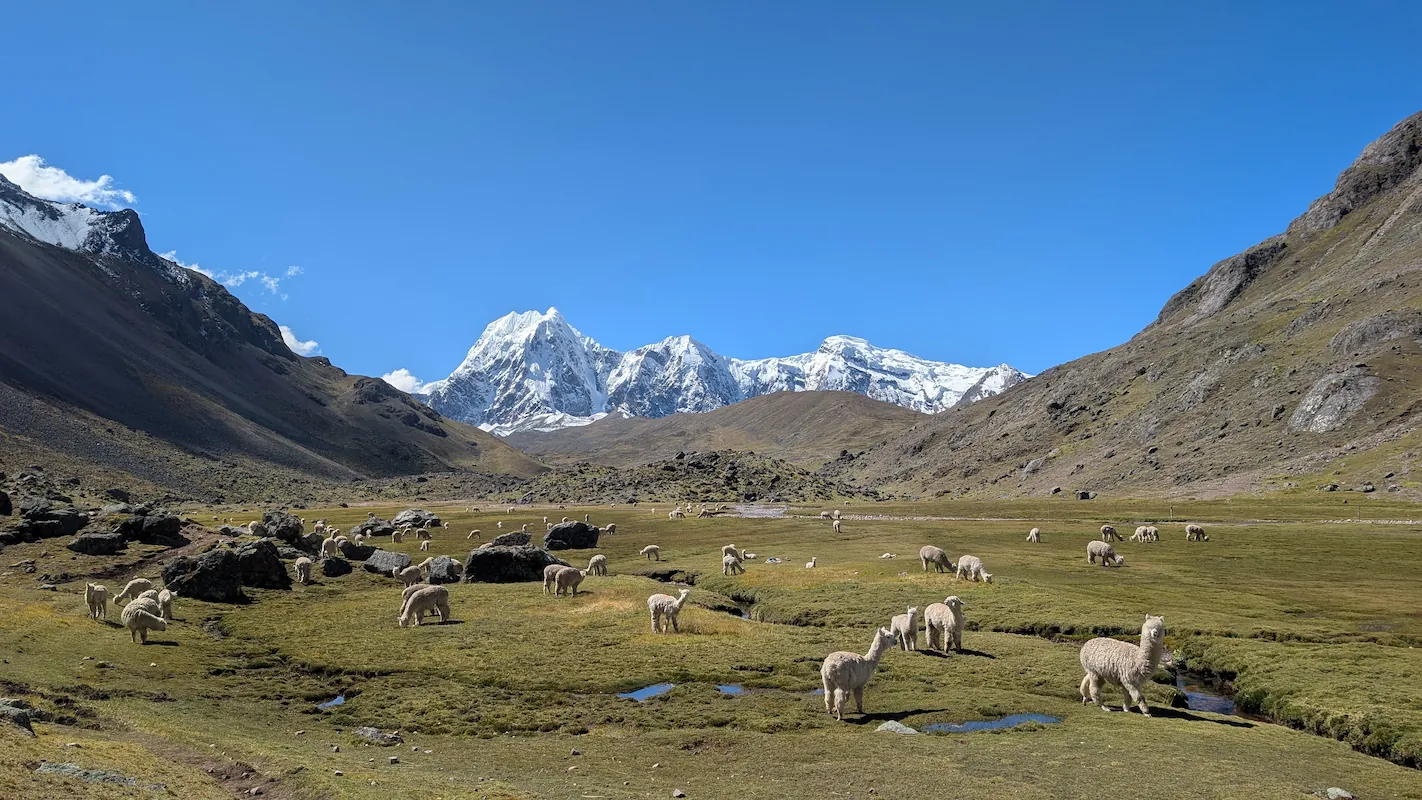
Alpacas grazing in a high Andean valley below the snow-capped Ausangate range, Cusco, Peru Alessio Zucchi
Our second day of walking crosses high valleys, alpaca and llama pastures and mountains in mineral shades of red, ochre and green. The pace is slow and steady: you climb with your breath, not with haste, and rest stops become a chance to take in the landscape and meet the herders who live on these high plateaus. Along the way we cross small streams and wide grasslands where the animals graze freely. In the afternoon we reach Anantapata and spend the night in a wide, silent landscape, under the starry Andean sky.
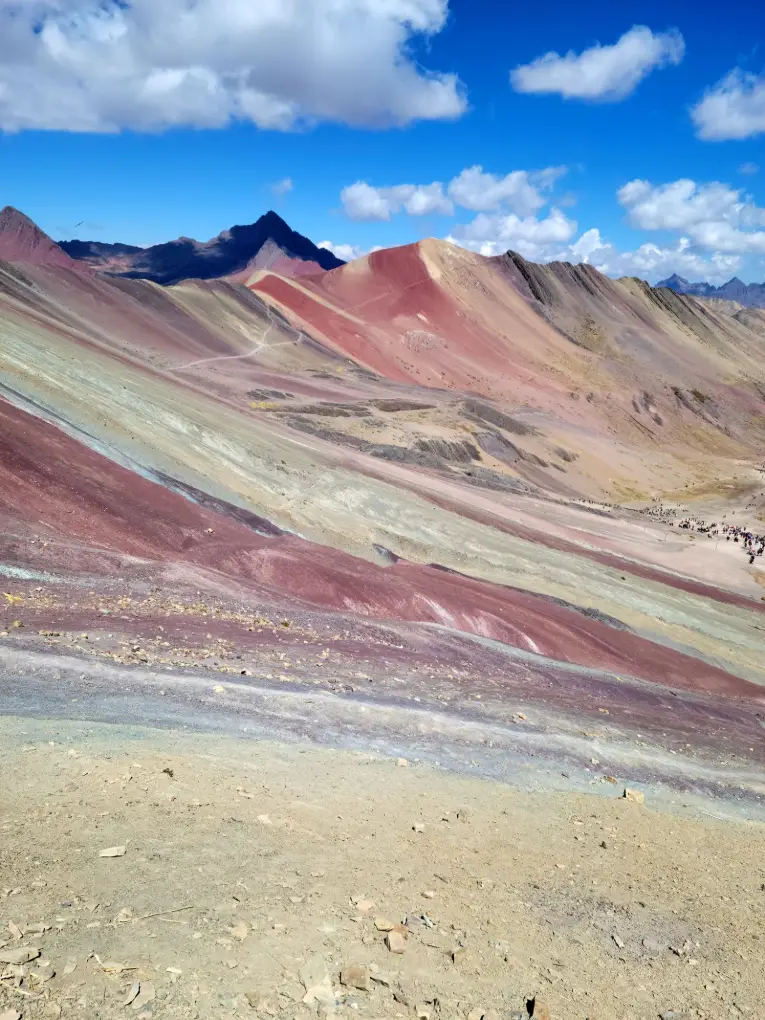
Day 6 Vinicunca, Rainbow Mountain, and Ausangate Qocha
Striped red, ochre and green slopes of Rainbow Mountain (Vinicunca) with snowy peaks behind, Cusco, Peru Bruno Garcia Pascual / Pexels
The most iconic day of the journey. We reach Vinicunca, Rainbow Mountain, on foot, above 5,000 metres, at a time away from the crowds of the day trips from Cusco. Its red, yellow, green and lilac stripes are mineral sediments layered over millions of years, and their tones shift with the light. After pausing to take in the colours and the view over the Andes, we continue to Ausangate Qocha, a glacial lake at the foot of the Apu's icefields, where we camp for the night.
Day 7 The trail to Surapata
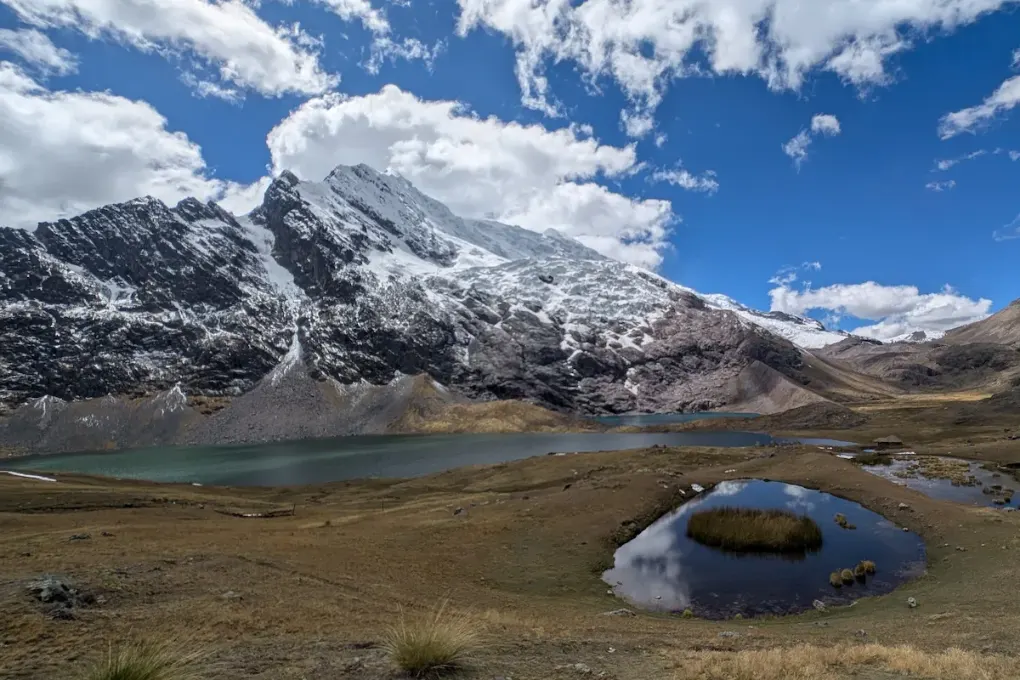
High-altitude lakes below a glaciated mountain on the Ausangate trek, Cusco, Peru Alessio Zucchi
A day of vast spaces and high altitude, including the highest pass of the circuit, above 5,000 metres. The climb is long but gradual, and the guide sets a pace that gets everyone to the top. The landscape shifts at every turn: hanging glaciers, moraines, emerald lakes and walls of dark rock. From the pass the view opens onto the whole range. We then descend to Surapata and camp near the herding communities who live at these heights all year round, raising alpacas and llamas as their ancestors did.
Day 8 Seven Lakes, Pacchanta hot springs and return to Cusco
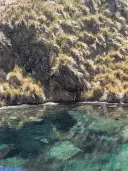
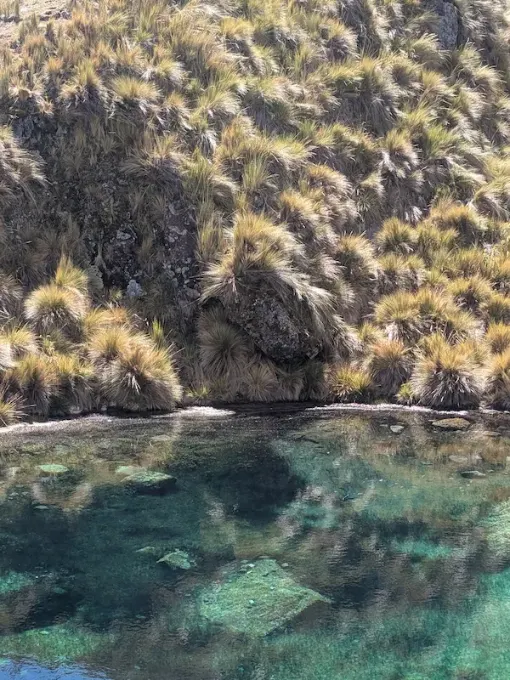
Crystal-clear turquoise water at one of the Seven Lakes of Ausangate, with ichu grass on the shore, Peru Alessio Zucchi
Our last day on the trail, past the Seven Lakes: pools of turquoise, green and blue lined up beneath the glacier, each a different colour depending on its minerals and depth. The path descends gently, leaving time to stop, take photos and say goodbye to the mountain. We reach Pacchanta for a soak in hot springs facing Ausangate, the best way to loosen tired muscles and close the trek. We say goodbye to the arrieros and return to Cusco in the afternoon, for a hot shower and a real bed.
Day 9 Cusco, city of the Incas
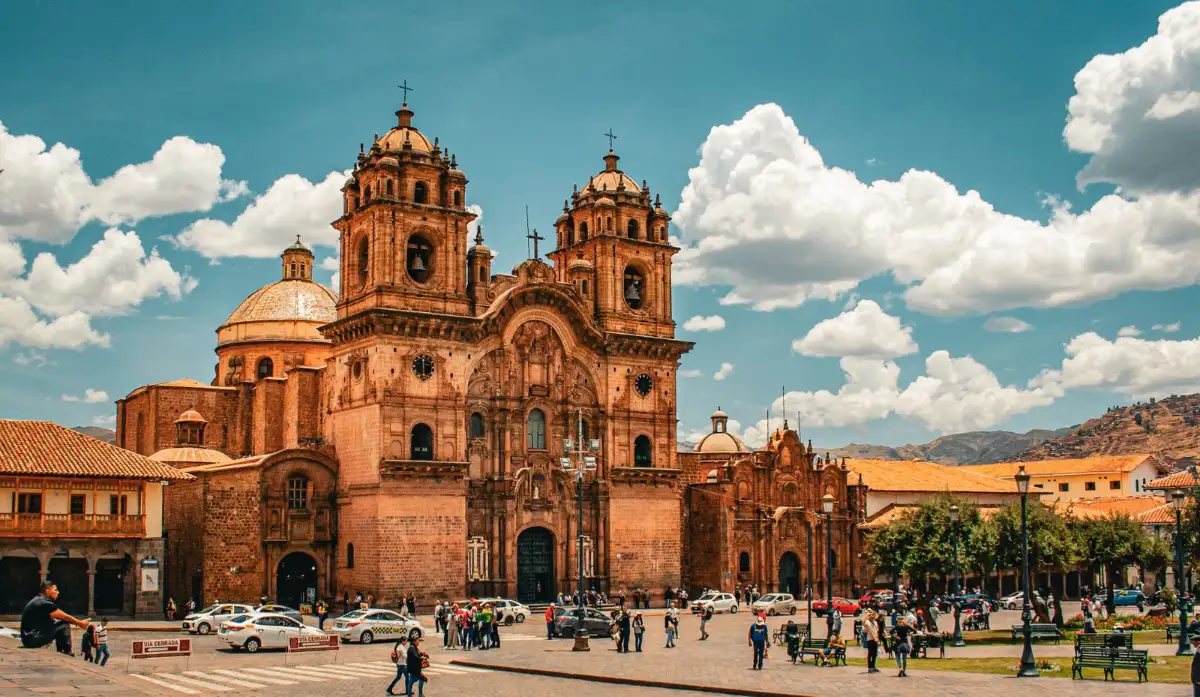
Church of La Compañía de Jesús on the Plaza de Armas of Cusco, Peru Cristhians_art / Pexels
A day to discover Cusco at an easy pace, on foot. We start at the Plaza de Armas, with the Cathedral and the church of La Compañía de Jesús, and walk to the Qorikancha, the Inca Temple of the Sun on whose foundations the conquistadors built the Santo Domingo convent: a perfect symbol of the city, where two worlds stand stone upon stone. We pass along Hatun Rumiyoq, the street of the famous twelve-angled stone, and climb to the lanes of San Blas, the artisans' quarter. We finish at San Pedro market, among Andean fruit, juices and local dishes, for a taste of everyday Cusco.
Day 10 Farewell
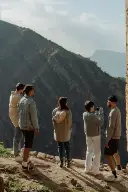
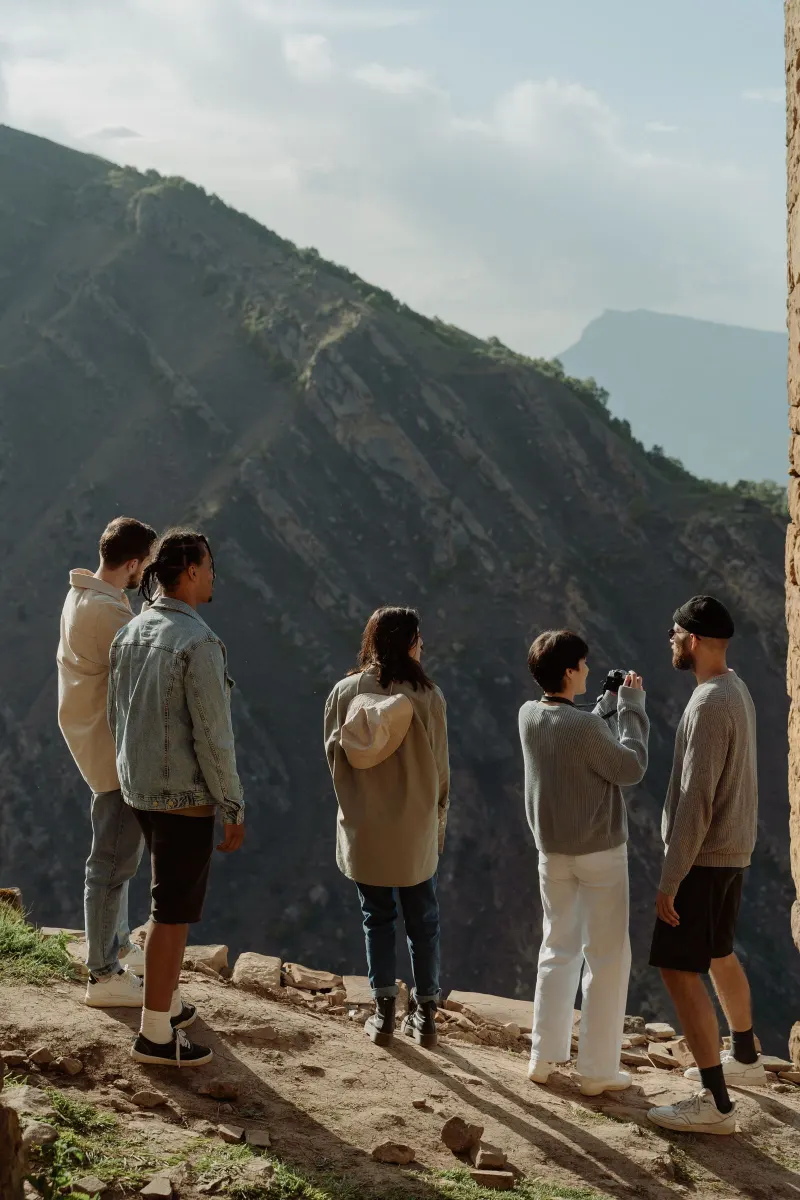
Group of friends standing with their backs to the camera on a mountain viewpoint, looking out over a deep valley cottonbro studio / Pexels
Breakfast and transfer to the airport. If you'd like to extend your trip in Peru, you can stay on in Cusco a few more days: we can organise Machu Picchu, the Amazon rainforest or Lake Titicaca for you. After ten days among Inca cities, Andean villages and passes above 5,000 metres, you leave with the Andes in your eyes, a few new friendships and a few certainties fewer: that's how a good journey should end.
Included
4 nights in base camp tents
All meals during the trek
Certified local guide
Mule porters for luggage
Cusco transfer (return)
First-aid kit and emergency oxygen
Guided visit to Pacchanta community
Not included
International flight to/from Cusco
Hotel in Cusco (nights before/after)
Personal trekking gear
Travel and health insurance
Alcoholic drinks and extra expenses
Tips for guide and porters

FAQ

How difficult is the Ausangate trek? +
It is a challenging trek because of altitude, not technique. You walk 5 to 7 hours a day for 5 days, camping between about 4,200 and 4,700 m and crossing passes above 5,000 m. No climbing skills are needed, but you should be fit and used to multi-day hikes; we recommend a few weeks of training.
What is the maximum altitude? +
The highest passes of the circuit are above 5,000 m, and Rainbow Mountain (Vinicunca) is also over 5,000 m. Ausangate itself rises to 6,384 m, but the trek goes around the mountain, not to the summit.
How is altitude sickness managed? +
The itinerary is built for gradual acclimatisation: three days in Cusco (3,400 m) and the lower Sacred Valley before the trek starts. Guides are trained to recognise altitude sickness and carry emergency oxygen and a first-aid kit.
Is Rainbow Mountain included? +
Yes. Rainbow Mountain (Vinicunca) is part of day 6 of the trip and is reached on foot during the trek, at a different time from the crowded one-day tours from Cusco.
Where does the trip start and end? +
The trip starts and ends in Cusco, Peru. The trek begins in Tinki, a village about 3 hours' drive south-east of Cusco, and ends at Pacchanta, from where we return to Cusco by road.
Do I need my own tent or sleeping bag? +
No, camping equipment is provided. Horses carry the shared gear and part of your personal luggage, so you only walk with a light daypack.
When is the best time for the Ausangate trek? +
The dry season, from May to September, has clear skies and dry trails, with nights well below zero at camp. April, October and November are shoulder months, greener and with some rain. From December to March the rainy season makes the trek harder.
How big is the group? +
A maximum of 10 travellers. A small group keeps a pace that suits everyone and a lighter footprint on the Quechua communities and landscapes we pass through.
Can I combine this trip with Machu Picchu? +
Yes. Machu Picchu is not part of this itinerary, but we can add extra days before or after the group trip and organise the visit for you.