Home Experiences Destinations Perú Nepal Bolivia Consulting Blog About Contact Plan Your Journey
EN IT ES
Trekking · Nature · Vilcanota Range, Cusco — Peru

Ausangate Trek — 5 Days Around the Sacred Guardian of the Andes

A high-altitude circuit around Cusco's highest sacred peak, through glacial lakes, alpaca meadows, and nights under Andean skies

Duration5 days
FormatPrivate

One hundred kilometres from Cusco, far from the well-worn tourist circuit, rises Apu Ausangate — at 6,372 metres, the highest peak in the region and one of the most sacred mountains in Andean cosmology. For the Quechua communities living at its feet, Ausangate is not simply a mountain — it is a living being, a guardian, a spiritual presence that governs the seasons and protects the herds.

This 5-day trek completes a full circuit of Ausangate through landscapes that shift constantly: emerald glacial lakes, meadows crossed by alpaca herds, remote valleys where time seems to stand still. Four passes above 5,000 metres — including the Palomani Pass at 5,200 m — lead through a world few travellers have walked. Nights are spent camping in silence, under Andean skies dense with stars.

An experience for those who want to approach the Andes not as a tourist, but as a traveller.

01
Guardian of the Andes

Full circuit around Apu Ausangate (6,372 m), the most sacred peak of the Cusco region

02
Landscapes up to 5,200 m

Four high-altitude passes up to 5,200 m among glacial lakes and wildlife

03
Natural hot springs

Relax in natural hot springs after the most demanding days

04
The Andean starlit skies

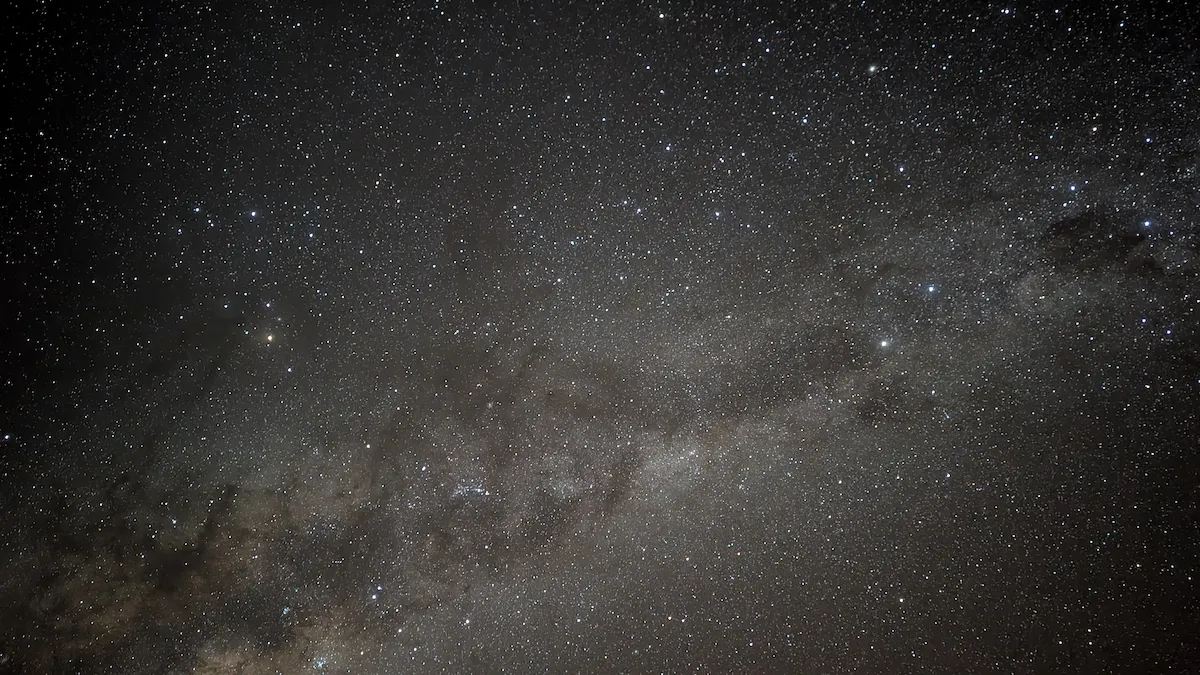
Astounding camping nights in complete Andean silence, far from any artificial light


Day by day

Day 1
Cusco → Tinqui → Upis — The first step toward the Apu

Departure from Cusco in the early morning heading southeast through the Vilcanota Valley to the village of Tinqui (3,900 m). From here the trail begins toward Upis camp (4,400 m): a gradual walk through meadows grazed by alpacas and llamas, designed to let the body adjust to altitude. In the evening, the natural hot springs of Upis receive tired legs after the first kilometres on trail.
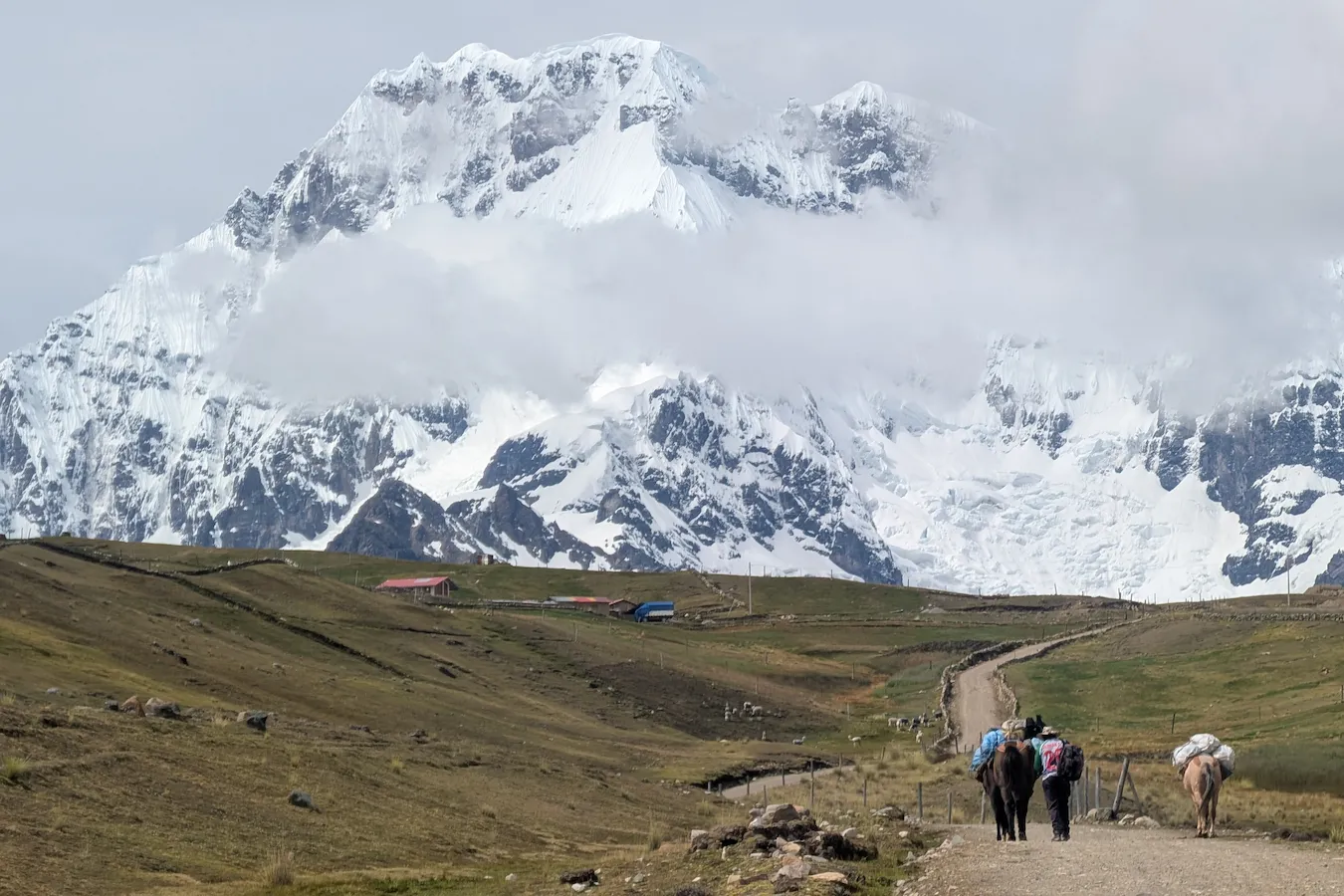
Cusco → Tinqui → Upis — The first step toward the Apu Alessio Zucchi
Day 2
Upis → Arapa Pass → Ausangate Lake — Beneath the glaciers

The longest day in terms of elevation gain. The trail climbs to Arapa Pass (4,800 m) with the first close views of Ausangate's glacial walls. A descent to Yanacocha follows for a rest stop, before crossing the Extreme Ausangate Pass at 4,850 m. Camp beside Ausangate Lake — with the peak reflected on the water — is one of the most silent and powerful moments of the entire circuit.
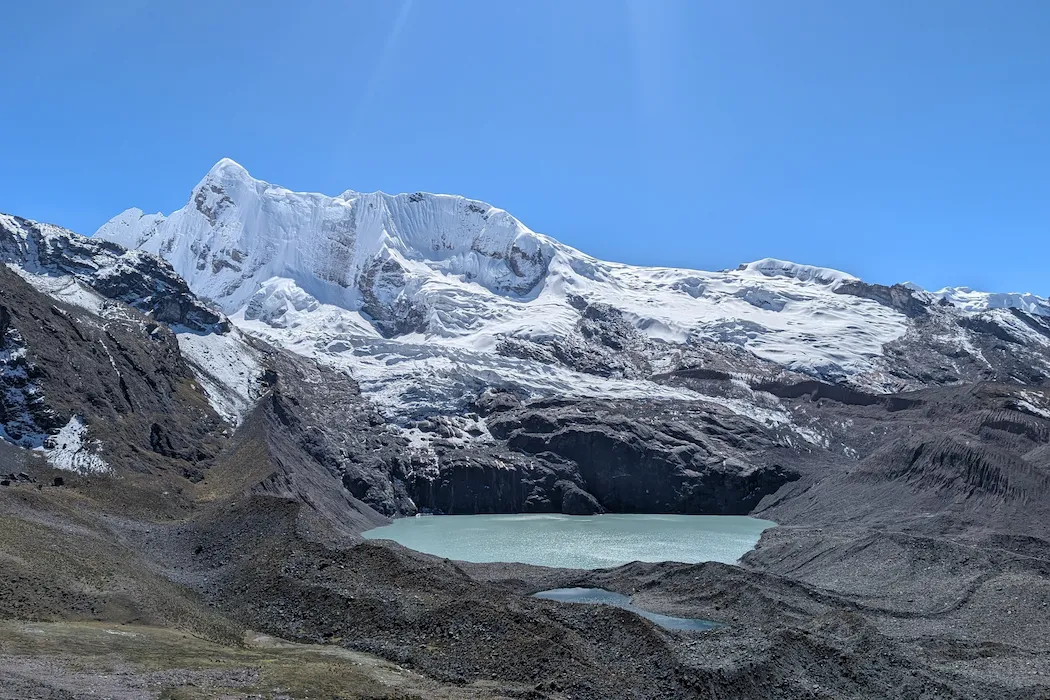
Upis → Arapa Pass → Ausangate Lake — Beneath the glaciers Alessio Zucchi
Ausangate Lake → Palomani Pass → Jampa — The roof of the trek Alessio Zucchi
Day 3
Ausangate Lake → Palomani Pass → Jampa — The roof of the trek

The most demanding and most rewarding day. The climb to Palomani Pass (5,200 m) marks the highest point of the entire trek — from here, a panorama of glaciers, coloured lakes and valleys stretching to the horizon opens up. The descent leads to the Finaya Pampa valley and the Jampa campsite (4,700 m), in a landscape of complete stillness.

Day 4
Jampa → Campa Pass → Pacchanta — Coloured lakes and hot springs

Campa Pass (5,100 m) opens onto one of the most unexpected landscapes of the circuit: the Seven Lakes of Ausangate, bodies of water in different colours set between the mountains, almost always empty. The descent to Pacchanta (4,350 m) runs between these lakes before reaching the final camp, where natural hot springs and a traditional Quechua dinner close the most beautiful day of the trek.
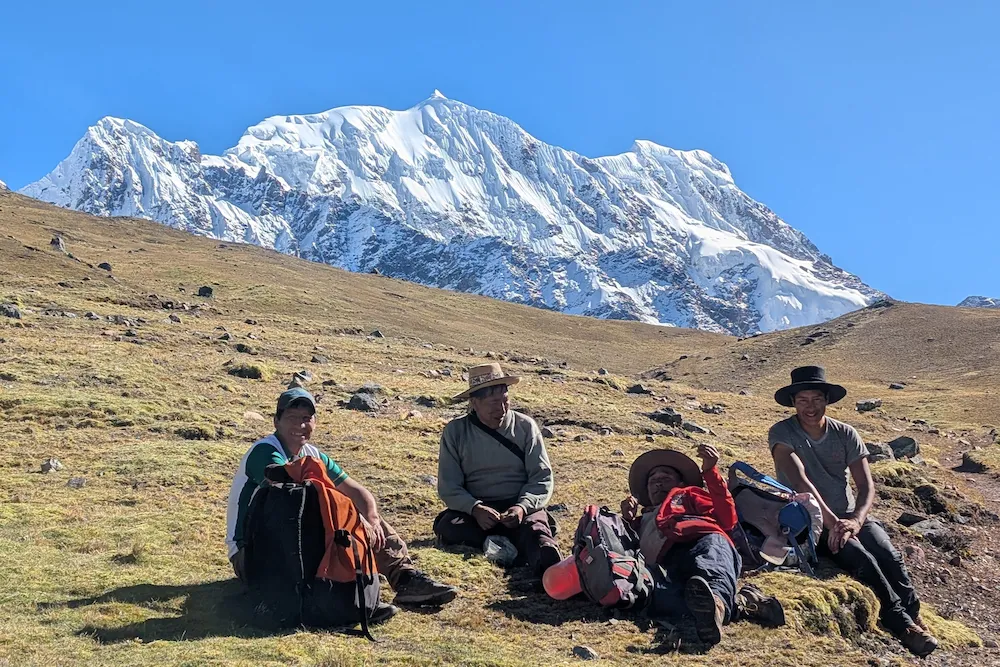
Jampa → Campa Pass → Pacchanta — Coloured lakes and hot springs Alessio Zucchi
Day 5
Pacchanta → Tinqui → Cusco — Farewell to the Andes

The final morning descends toward Tinqui along trails offering the last views of Ausangate. The vehicle returns to Cusco with a final lunch of local cuisine as a farewell to the Andes.
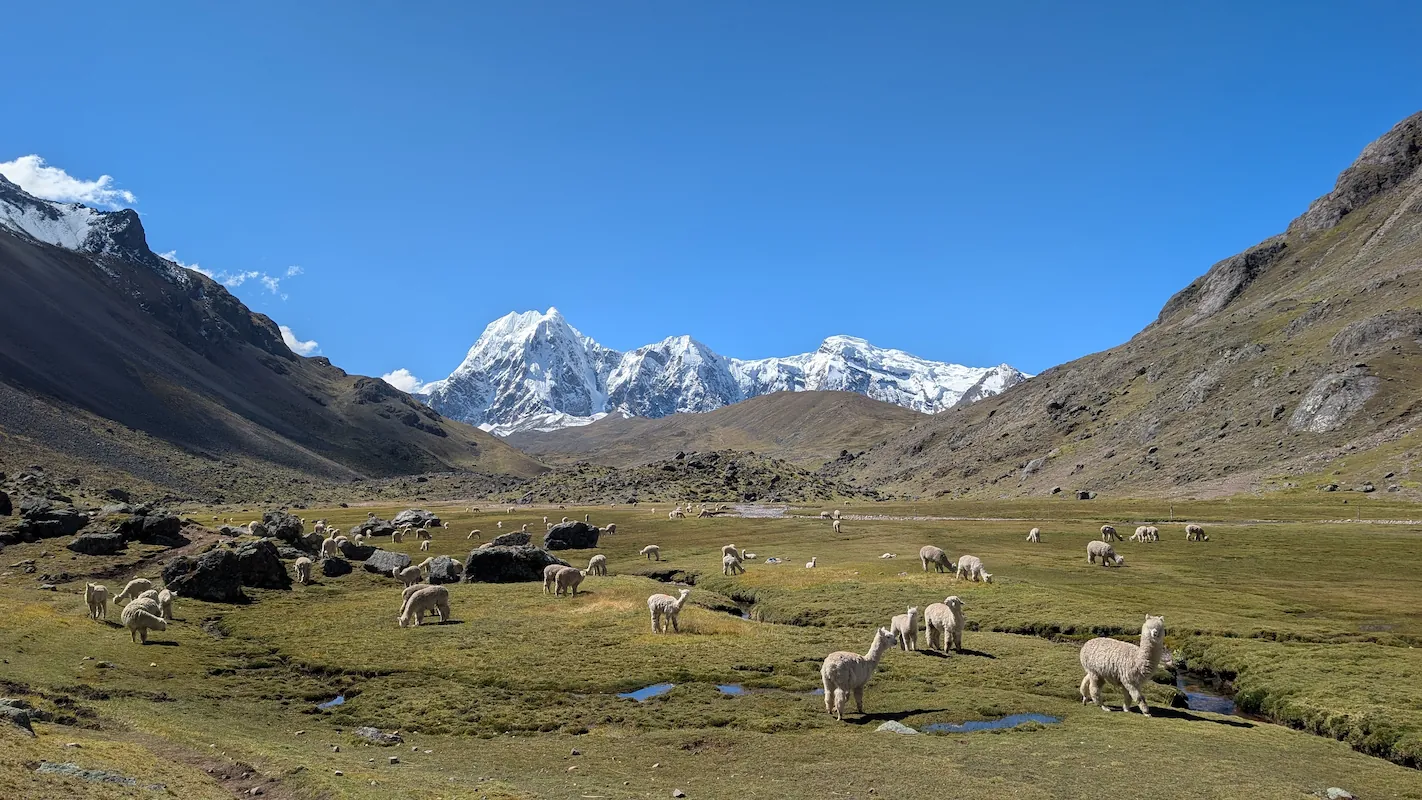
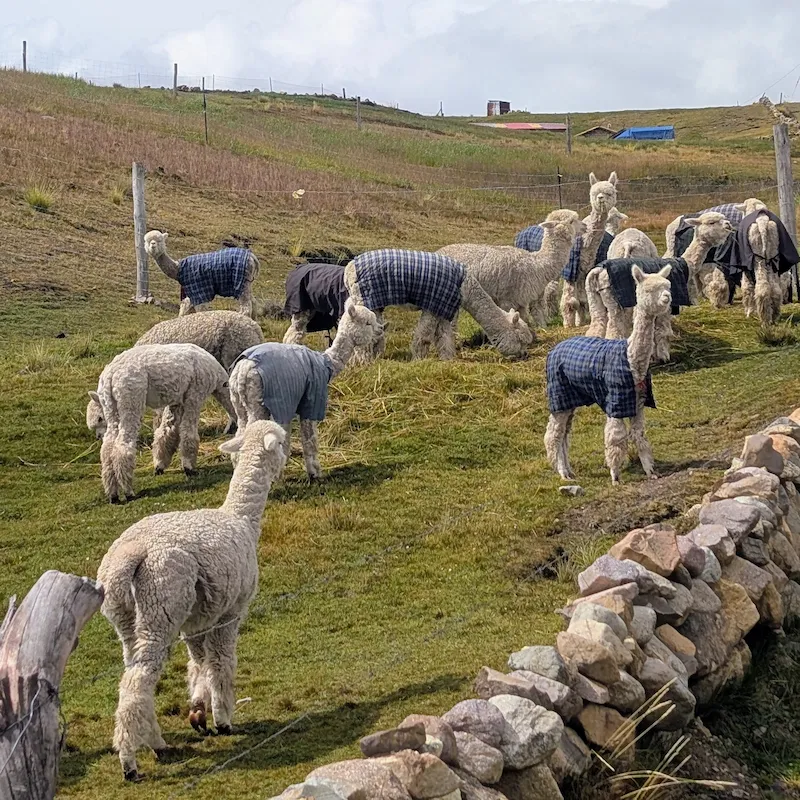
Landscape on the Ausangate mountain range with alpacas, Perú
Ausangate Trek — 5 Days Around the Sacred Guardian of the Andes

Included
Private transport Cusco–Tinqui–Cusco
Professional local Quechua-speaking guide
Camp cook and assistant
Mules for equipment transport (up to 6 kg per person)
Tents, sleeping bags and sleeping mats
All meals on trek (4 breakfasts, 5 lunches, 4 dinners)
First aid kit and emergency oxygen
Not included
·Flights and accommodation in Cusco
·Travel insurance (mandatory)
·Tips for guides, cook and muleteers
·Community entrance taxes
·Personal expenses and souvenir purchases
·Personal medication and altitude sickness treatment
·Personal trekking gear (boots, poles, backpack)

Frequently asked

What fitness level is required for this trek?+
The Ausangate Trek is a challenging high-altitude experience. You should be comfortable hiking 6–8 hours per day with a light daypack, and have some previous trekking experience. The main challenge is altitude — not technical difficulty. Good cardiovascular fitness and at least 2–3 days of acclimatisation in Cusco before departure are essential.
How do I acclimatise before the trek?+
We strongly recommend arriving in Cusco at least 2–3 days before the trek. Spend the first day resting, drink plenty of water, avoid alcohol and eat light meals. Short walks around Cusco or the Sacred Valley help the body adapt. Diamox (acetazolamide) can be prescribed by a doctor as a preventive measure — consult your physician before the trip.
What is the best time of year to do the Ausangate Trek?+
The dry season from May to October offers the most stable weather, clearest skies and best trail conditions. June, July and August are the most popular months. The wet season (November to April) brings rain and mud but far fewer people on the trail — February is the most challenging month and some operators suspend departures. We operate year-round and will advise you on conditions at the time of your booking.
Is this a private experience?+
Yes — all True Path experiences are private. Your guide, cook and support team are dedicated exclusively to your group. You set the pace, the daily schedule is flexible, and the experience is tailored to your needs from the first day.
What should I pack for the trek?+
Essential items include: waterproof trekking boots (broken in), warm layers (temperatures drop below 0°C at night), a quality sleeping bag rated to -10°C, sun protection (SPF 50+, sunglasses, hat), trekking poles, a headlamp, personal medication including altitude sickness tablets, and a light daypack. We provide a detailed packing list upon booking.
from
$800
per person · private experience
Questions? WhatsApp →